Skip to content
Investryx
Portfolio & performance

A portfolio built on a ledger, not a spreadsheet.

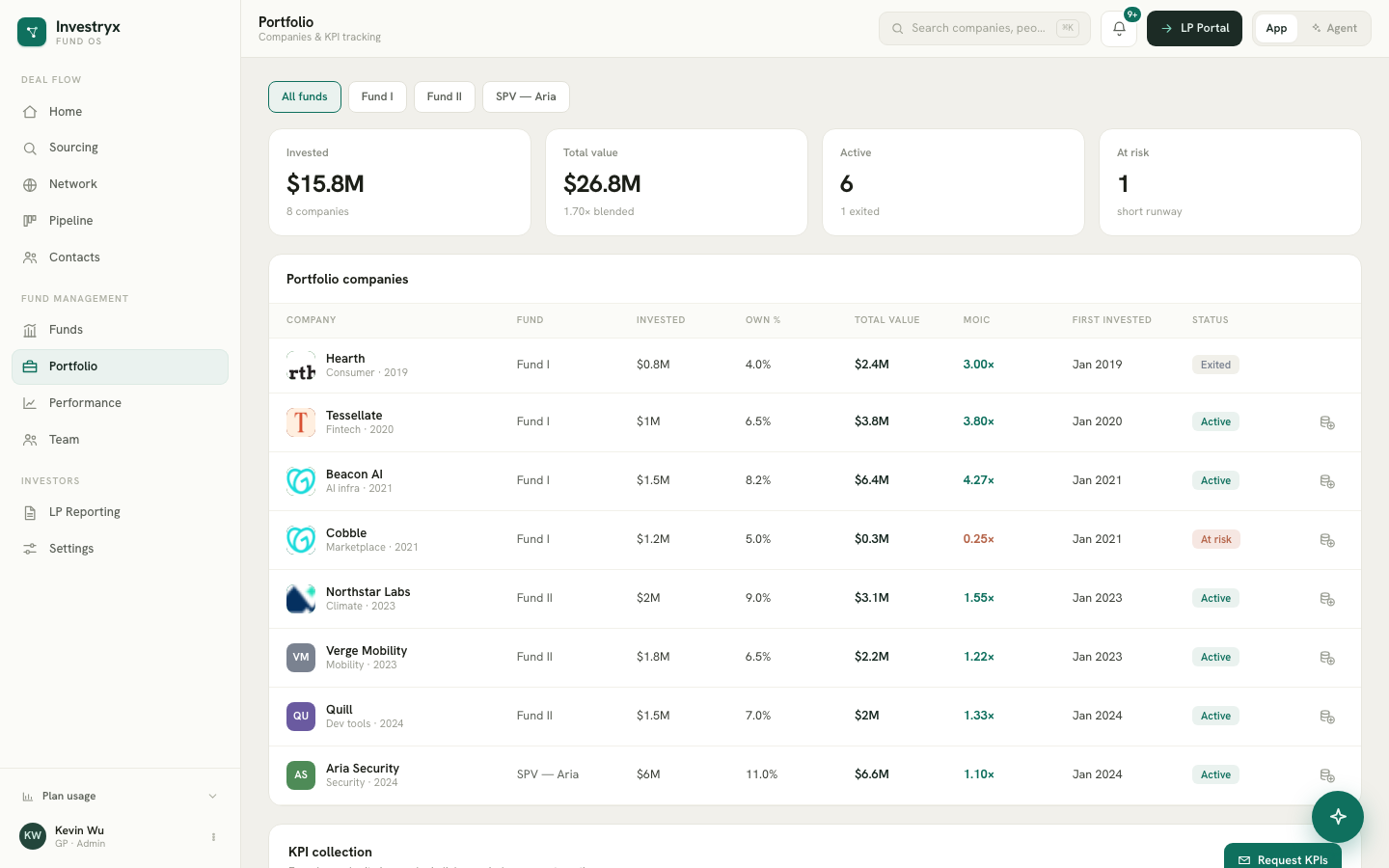
Every investment, follow-on, markup and exit is a dated entry. Ownership, cost basis, marks and multiples are derived from those entries, so the numbers reconcile by construction and the history is always there.

Portfolio list with company, fund, first invested date, ownership, cost, mark, MOIC and KPI status
Demo workspace. Companies, funds and people are fictional.

Rounds recorded even when you do not participate

Record a new round with its terms: post-money, amount raised, lead, instrument and security. Flip “we participated” to add your cheque, fund, board seat and pro-rata. Your ownership dilutes or holds accordingly, and the position history shows every step with an edit icon.

  • Initial round, follow-ons, markups and exits as one chain
  • Ownership override when the cap table says otherwise, marked as such
  • Co-investors accumulate on the position across rounds
KPIs from founders without a login

Request quarterly KPIs from one company or the whole portfolio. Founders get a short branded form behind a personal link, no account required. Overdue requests surface on the portfolio and in notifications, with a 48-hour guard on reminders.

  • Revenue, burn, runway and headcount by default; add your own metrics
  • Received values sit on the position with the period they cover
  • Status chips: on track, overdue, not collected

Performance computed where it belongs

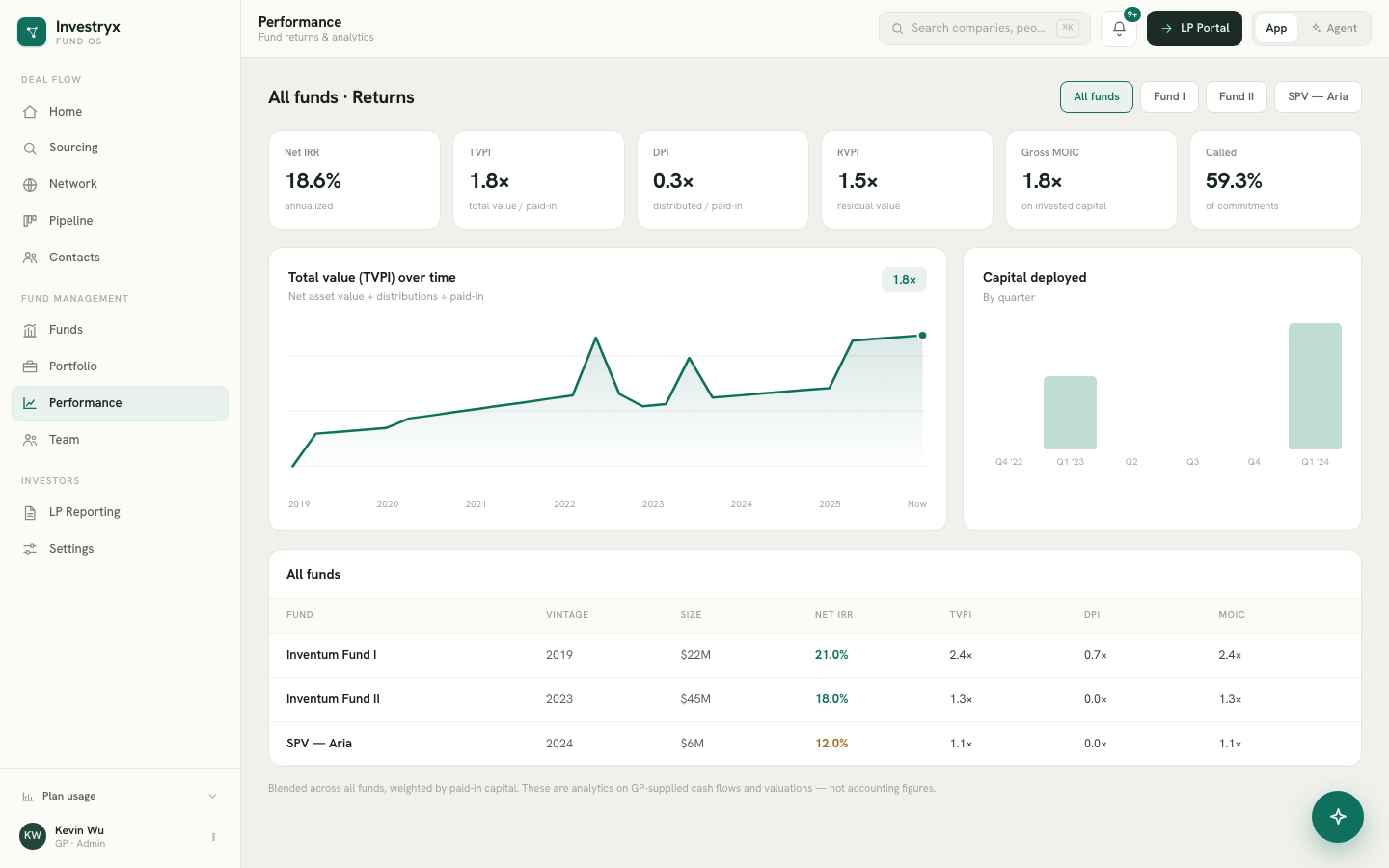
TVPI, DPI, called percentage and IRR are calculated on the server from the ledgers: rounds, capital calls and distributions. Compare funds side by side, see the quarterly TVPI curve and deployment by quarter, and switch the reporting currency with a dated FX rate.

  • Per-fund and all-funds views, scoped by fund pills, no global switcher to forget
  • Paid-in weighted blends when you look across vehicles
  • The same figures feed the LP report, so LPs never see a different number
Performance screen with metric cards, quarterly TVPI curve, deployment bars and a fund comparison table
Demo workspace. Companies, funds and people are fictional.

How the portfolio works

  1. 1

    Record the investment

    Usually by closing a deal; the form captures round terms, cheque, fund, valuation and ownership in one go.

  2. 2

    Keep the ledger current

    Add rounds as they happen, participated or not; record exits with type, proceeds and date.

  3. 3

    Collect and report

    Request KPIs each quarter, watch performance update, and build the LP report from the same data.

Security

Numbers you can defend to an LP.

Nothing is typed twice and nothing is computed in the browser. Every figure traces back to a dated ledger entry.

  • Append-only ledgers

    Rounds, calls and distributions are entries with a date and an author. Aggregates are derived, never edited.

  • Server-side math

    Multiples and IRR are computed once, on the API, and reused by the portfolio, performance and reporting screens.

  • Founder data stays scoped

    A KPI link opens one request for one company. It cannot see anything else.

Portfolio questions

How is ownership calculated?

From the chain of rounds: your ownership after each round equals (previous ownership × pre-money + your amount) ÷ post-money, with pre-money derived as post-money minus the amount raised. You can override a step when the cap table says otherwise, and the override is shown.

Can I track angel investments without a fund?

Yes. The Angel plan tracks personal positions with the same ledger, KPIs and performance, without fund vehicles.

What about multiple currencies?

Each fund has its own currency. The performance and funds screens convert to a reporting currency using a dated rate that is shown on screen.

Do founders need an account for KPIs?

No. Each request carries a personal link to a short form. It expires with the request and records who submitted what and when.

Run your fund from one calm place.

Fourteen days free. Card required, charged only when the trial ends. Cancel anytime.